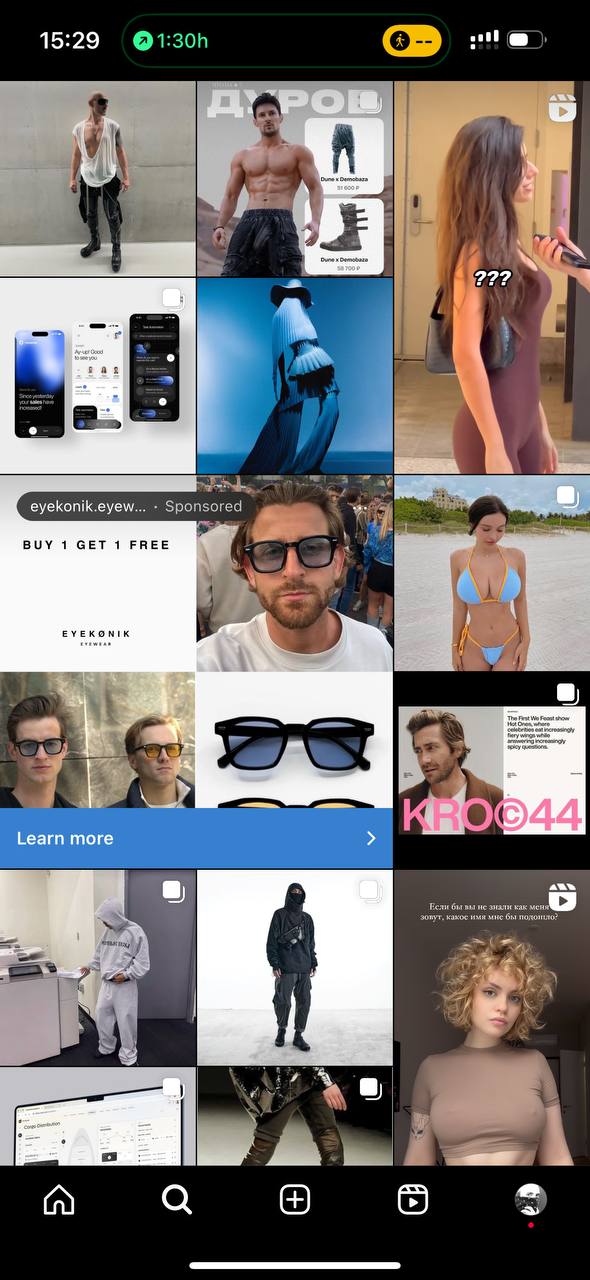
Working on advertising tasks is a separate pleasure. Advertising is a medium connecting people who produce with people who search. For the…
Working on advertising tasks is a separate pleasure. Advertising is a medium connecting people who produce with people who search. For the connection to happen, the message must clearly convey the essence of the product or service. The more precisely it is formulated, the more precisely it is understood. But that is only half the work. It is important to wrap the useful message, to design it so that the appearance also transmits usefulness. Beyond Figma artboards and Pinterest moodboards there is a rather aggressive internet environment unfriendly to people. Banners that pop up the moment you enter a site, redirects, unskippable splash screens, hidden "close" crosses, and so on. It is always worth keeping in mind what environment a person spends their day in online. To draw an effective advertising message, you do not need to invent a louder image, but try to mimic the environment where the message will be placed. The formats that work best are those that resemble an organic interface. Tested many times at Yandex. That is why advertising posts in Zen look native. They perform much better than banners. That is why search engine results look the way they do. And ads in Stories work well when they look like UGC content. The brain scans screens and instantly divides information into useful and trash. Which category do banners fall into? Exactly. What is cool in the screenshot: the advertising post mimics four pictures in the Instagram feed instead of one banner. Looks native, looks like content. Works