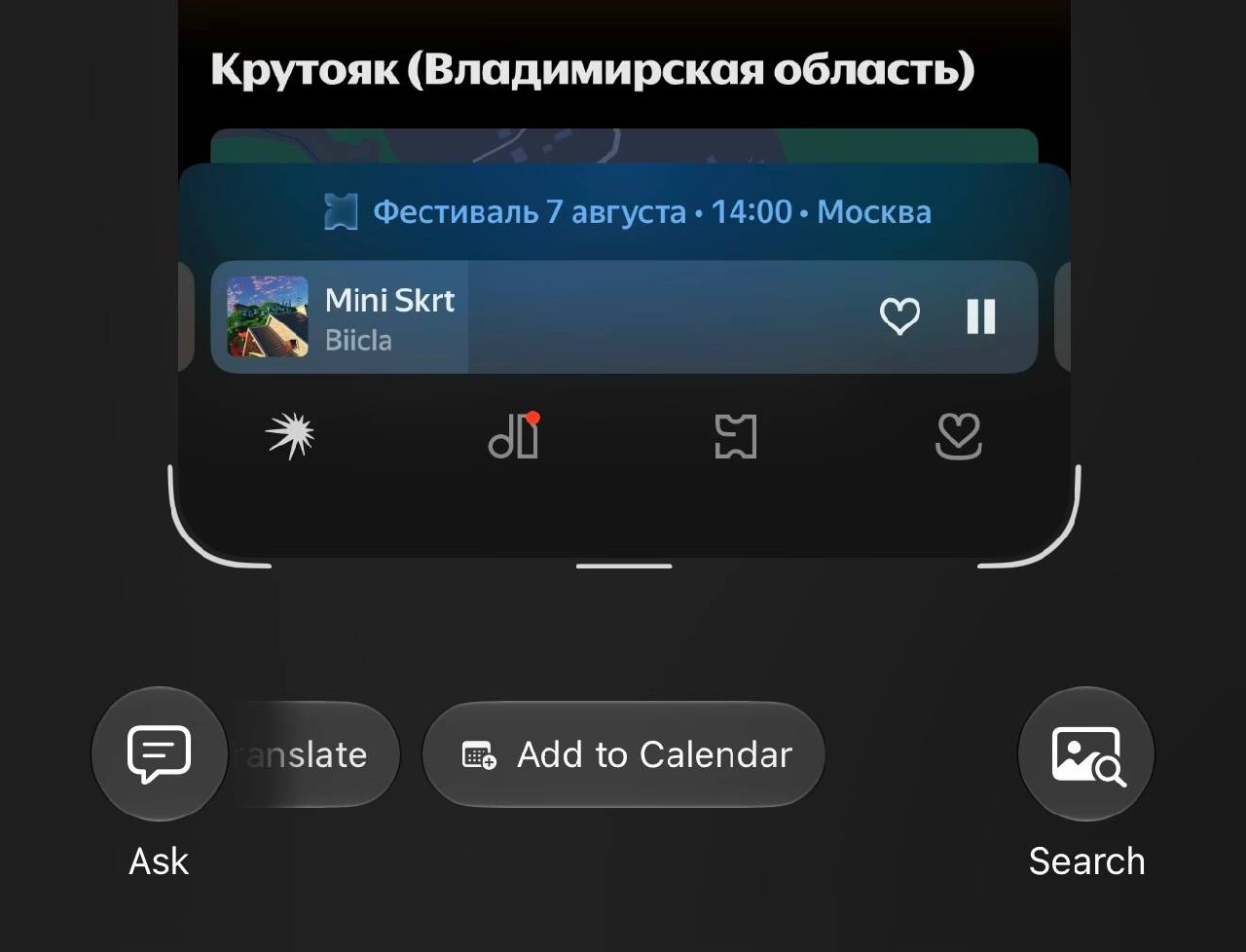
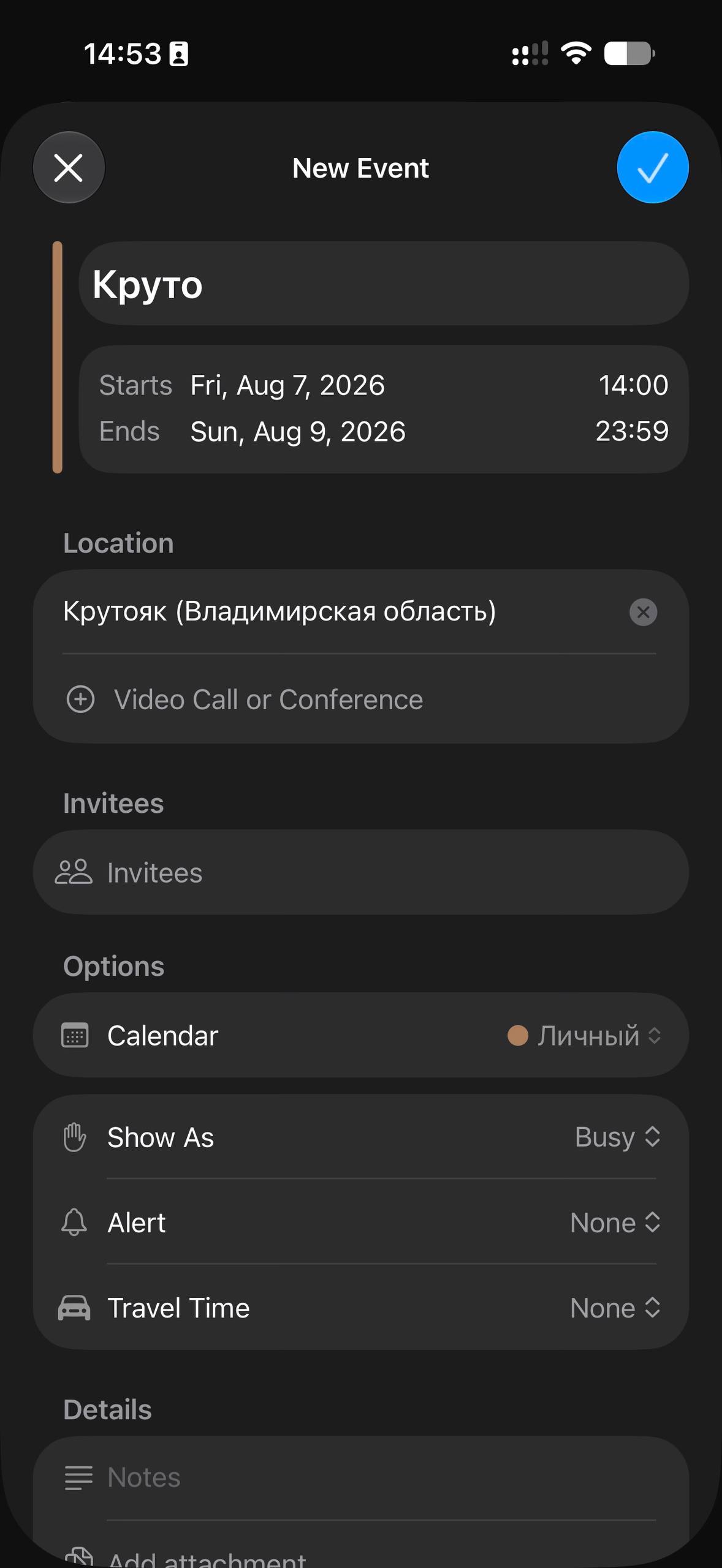
“I’m interested” We write emails that we send to ourselves, keep endless Google Docs with to-do lists, take screenshots of things that caug…
“I’m interested” We write emails that we send to ourselves, keep endless Google Docs with to-do lists, take screenshots of things that caught our attention: A review of a new café — screenshot A content recommendation — screenshot A fragment of an important conversation — screenshot Yet another syrniki recipe — screenshot After you take a screenshot, operating systems show an interface with tools for working with it. An example from iOS: I want to remember information about an upcoming concert. Notice the button at the bottom for adding the event to the calendar. And it works! An event written in Russian inside a Russian-language app is recognized by an English-speaking OS and added to the calendar. Magic! Yeeah, large language models don’t care which languages they speak. That is why they are large. Recognizing information in a screenshot is only the first step. — It feels natural. Computers are meant to understand what interests us. Not through a reasoning crutch like “why did he take a screenshot just now?” or a forced exchange with an AI assistant: “Siri, there’s this, like, concert thing on my phone, I’ll probably, well, maybe go, we’ll see.” One step later, computers and phones need an “I’m interested” button. Pressing it should not create a screenshot, but return a personalized understanding of what exactly is interesting and what our next steps are. — Want me to book a transfer to Krutoyak in Vladimir Oblast?